
How Remote Mental Evaluations Process Simplify Care

Getting a mental health evaluation should not depend entirely on how close someone lives to a provider, how easily they can travel, or whether their schedule leaves room for a long in-person appointment. Remote mental evaluations can reduce some of those barriers while still allowing a structured, professional assessment to take place.[1][2]
That does not mean remote evaluation is casual or incomplete. It means the evaluation is delivered through secure technology instead of a traditional office visit. When done well, the process still depends on privacy, preparation, clinical judgment, and a clear understanding of the person’s symptoms and daily functioning.[1][3]
How the Remote Mental Evaluations Process Usually Works
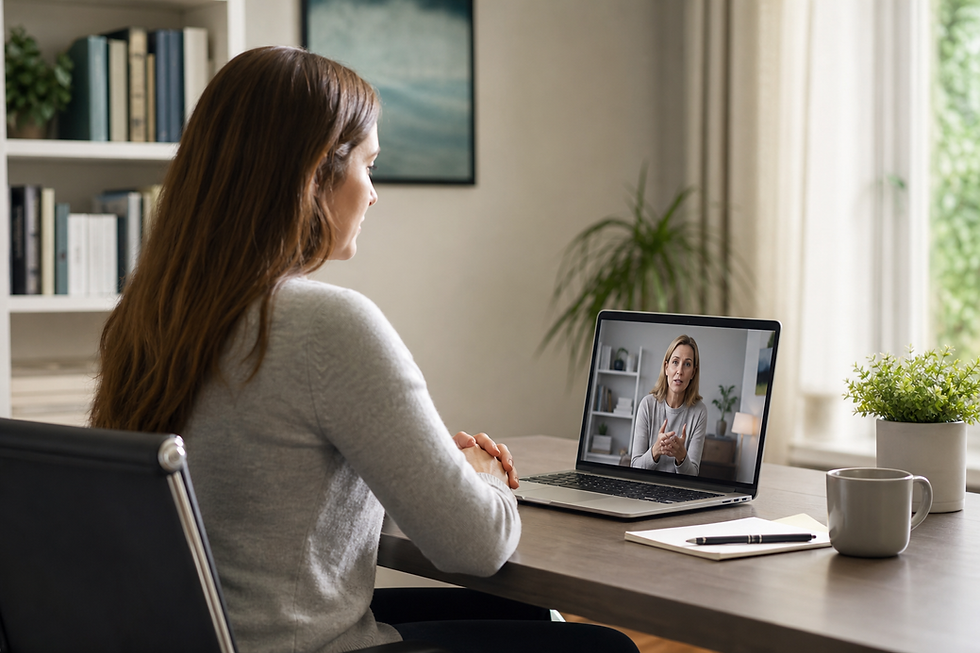
A remote mental evaluation is a mental health assessment completed through a secure video platform. Depending on the purpose of the referral, it may include a clinical interview, symptom review, history, behavioral observations, and standardized measures.
Even though the format is different from sitting in an office, the goals are the same: to understand what symptoms are present, how long they have lasted, how severe they appear to be, and how much they are affecting everyday life. In some situations, the evaluation may also help clarify whether additional treatment, monitoring, or follow-up care would be appropriate.
How the Process Usually Works
Most remote mental evaluations follow a fairly straightforward sequence. The patient schedules the appointment, receives instructions in advance, joins the session from a private location, and completes the evaluation by video with a licensed clinician.[1][2]
Before the appointment, the provider may share information about:
how to access the platform
what device or internet setup is needed
whether forms should be completed ahead of time
how to choose a quiet, private space
what records or background information may be helpful[1][2]
During the visit, the clinician typically confirms identity, reviews the purpose of the appointment, and proceeds with the evaluation itself. Afterward, findings may be documented in a report or used to guide next steps, depending on the setting and purpose of the evaluation.
Why Remote Evaluations Can Make Care Easier to Access
The remote mental evaluations process can make care easier to access when travel, scheduling, or mobility issues would otherwise delay an appointment. This is a large advantage of remote mental evaluations.
Telehealth guidance from HHS emphasizes that virtual care can help people receive services from home and reduce practical barriers tied to transportation, location, and scheduling.[1][4]
That matters for people who:
live far from specialty providers
have mobility limitations
are balancing work or caregiving demands
feel overwhelmed by the extra time required for travel and waiting rooms
Remote access can also help people stay more consistent with follow-up when additional care is recommended. The result is not necessarily a different kind of evaluation, but a process that may be easier to reach and easier to complete.
Privacy and Preparation Still Matter

One reason remote care works best when it is taken seriously is that privacy matters just as much online as it does in person. HHS guidance notes that telehealth visits are protected by privacy rules, but patients still need a space where they can speak openly and avoid being overheard.[2][3]
A better appointment usually starts with a the following steps:
choose a quiet, private location
test the camera, microphone, and internet connection
join early in case there are technical problems
close other apps and distractions
keep notes, medications, or relevant documents nearby[1][2]
Those details may seem small, but they make a real difference. A rushed or distracted setup can interfere with the quality of the conversation and make the evaluation less useful than it would be.
Remote Does Not Mean Less Structured
Some people assume a remote evaluation is automatically less formal or less thorough than an in-person one. That is not true. The setting is different, but the clinician still has to gather history, assess symptoms, ask follow-up questions, and make professional judgments about what the information means.
In behavioral health telehealth, providers are still expected to address privacy, informed consent, patient identity, and emergency planning when appropriate.[3][5] In other words, the technology may simplify access, but it does not remove the need for standards. The value of remote care is not that it lowers the bar. It is that it can make qualified care easier to reach without abandoning structure.
When Remote Evaluation May Be Especially Helpful
Remote mental evaluations can be particularly useful when the main obstacle is logistics rather than clinical complexity. Someone may need an evaluation but have trouble traveling, taking time off work, arranging childcare, or locating a nearby provider with the right expertise.
They may also help when symptoms themselves make in-person participation harder. Anxiety, pain, fatigue, driving-related stress, or general overwhelm can all turn a traditional appointment into a bigger hurdle than it needs to be. When telehealth is appropriate, it can remove friction to help people move forward sooner.
Why the Process Matters
A mental health evaluation is often most useful when it happens before delays, confusion, or access problems allow symptoms to go unaddressed for too long. A remote format can help reduce those delays by making it easier to connect with a provider, complete the appointment, and move to the next step with more clarity.
At Ascend Psychological Service, that is part of the value of remote mental evaluations. The purpose is not to make the process feel impersonal. It is to make care more reachable while still preserving the structure, privacy, and clinical focus a good evaluation requires.

Citations
[1] U.S. Department of Health and Human Services, Telehealth.HHS.gov. What should I know before my telehealth visit? https://telehealth.hhs.gov/patients/what-should-i-know-before-my-telehealth-visit
[2] U.S. Department of Health and Human Services, Telehealth.HHS.gov. How do I protect my data and privacy? https://telehealth.hhs.gov/patients/additional-resources/data-privacy
[3] U.S. Department of Health and Human Services, Telehealth.HHS.gov. Protecting patients’ privacy. https://telehealth.hhs.gov/providers/best-practice-guides/telehealth-for-behavioral-health/preparing-patients-for-telebehavioral-health/protecting-patients-privacy
[4] U.S. Department of Health and Human Services, Telehealth.HHS.gov. How do I use telehealth for behavioral health care? https://telehealth.hhs.gov/patients/additional-resources/telehealth-and-behavioral-health
[5] U.S. Department of Health and Human Services, Telehealth.HHS.gov. Obtaining informed consent for telebehavioral health. https://telehealth.hhs.gov/providers/best-practice-guides/telehealth-for-behavioral-health/preparing-patients-for-telebehavioral-health/informed-consent-for-telebehavioral-health
Disclaimer
This article is provided for educational and informational purposes only and should not be considered medical, psychological, or legal advice. It is not intended to determine whether remote or in-person evaluation is appropriate for any specific individual. People with mental health concerns should consult qualified healthcare professionals regarding their specific circumstances.


