
Understanding Telehealth Mental Health IME Evaluations
- Lance Fleming
- Aug 3
- 5 min read

Not every mental health evaluation is done for treatment. In some situations, a formal evaluation is requested to document symptoms, assess functioning, and provide an objective professional opinion. When that type of assessment is conducted remotely, it is often referred to as a telehealth mental health IME evaluation.
A telehealth mental health IME evaluation uses secure video technology to complete a structured psychological assessment without requiring the examinee and evaluator to be in the same physical location. The format may be different from an in-person appointment, but the core purpose remains the same: to gather information carefully, review relevant history, and assess the person’s current presentation in a professional, clinically grounded way.[1][2]
To some, the term itself can sound unfamiliar or intimidating. A clearer way to think about it is this: it is a formal mental health evaluation conducted through a secure virtual setting, usually when documentation, clinical clarification, or independent review is needed.
What a Telehealth Mental Health IME Evaluation Is
A telehealth mental health IME evaluation is a structured assessment completed by a licensed mental health professional using video-based technology. The evaluator may review records, ask detailed questions about symptoms and history, consider changes in daily functioning, and in some cases use standardized assessment tools.
Unlike a therapy session, the goal is not ongoing treatment or emotional support during the appointment. The purpose is assessment and it shapes the tone of the visit, the type of questions asked, and the final product, which is usually a written report rather than a treatment plan.
These evaluations may be used in a range of contexts where someone needs a neutral mental health assessment. Depending on the setting, that can include questions about trauma symptoms, anxiety, depression, psychological injury, functional impact, or the relationship between reported symptoms and daily life.
How Telehealth Changes the Format, Not the Purpose
The main difference in a telehealth mental health IME evaluation is the setting. Instead of meeting in an office, the individual joins from a private location using a laptop, tablet, or phone. Federal telehealth guidance emphasizes the importance of using secure technology, protecting privacy, and preparing patients so the visit can proceed smoothly.[1][2][3]
That means the evaluator still needs a clear interview, a reliable connection, and an environment that supports focused conversation. The remote format may improve access for people who live far from specialty providers, have travel limitations, or need a more flexible scheduling option. At the same time, telehealth does not remove the need for professionalism, attention, or careful documentation.
In other words, telehealth changes how the evaluation is delivered, not the need for a thoughtful and clinically sound process.
What Usually Happens Before the Appointment
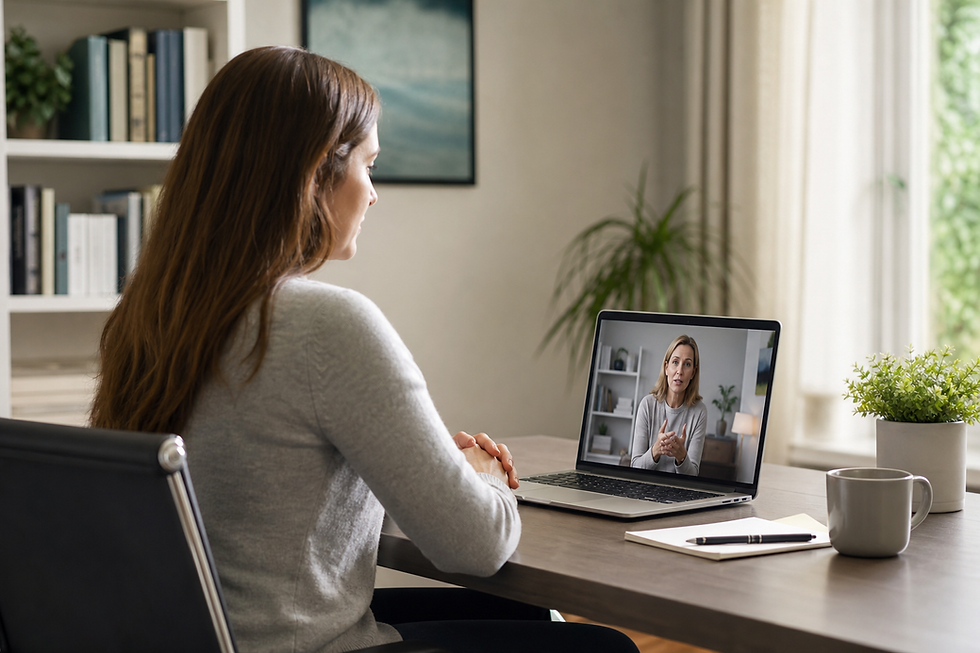
Preparation matters more than many people expect. A telehealth mental health IME evaluation works best when the technical side is handled ahead of time and the setting is as private as possible. HHS telehealth guidance advises patients to check their device, confirm visit details, and choose a location where they can speak openly without interruptions.[1][2]
Before the appointment, the examinee may receive instructions about the platform being used, the time of the session, identification requirements, and whether any documents need to be available. In some cases, records are reviewed in advance by the evaluator. In others, some background information may be gathered closer to the time of the evaluation.
It is also important to understand the role of the appointment before it begins. Because this is an assessment rather than a therapy visit, the conversation may feel more formal and more detailed than a typical counseling session. That does not mean the process should feel adversarial. It means the evaluator is trying to gather enough information to form a clear and supportable opinion.
What to Expect During the Evaluation
Most telehealth mental health IME evaluations begin with basic orientation steps. The evaluator may confirm identity, explain the purpose of the visit, review the limits of confidentiality as they apply to the evaluation, and make sure the examinee is in a setting where the conversation can proceed privately.[3]
From there, the interview often moves through several areas. These may include the reason the evaluation was requested, relevant background history, current symptoms, prior treatment, trauma exposure when applicable, and the effect of symptoms on work, relationships, daily responsibilities, and general functioning. Some evaluations also include standardized psychological measures, depending on the nature of the referral and the evaluator’s methods.
The tone of the appointment is usually focused and methodical. Questions may be repetitive in places, not because the evaluator is being careless, but because consistency, clarity, and detail matter in formal assessment. The goal is to understand not only what symptoms are reported, but how those symptoms have developed, how persistent they are, and how they appear to affect everyday life.
Privacy, Setting, and Professional Standards Still Matter
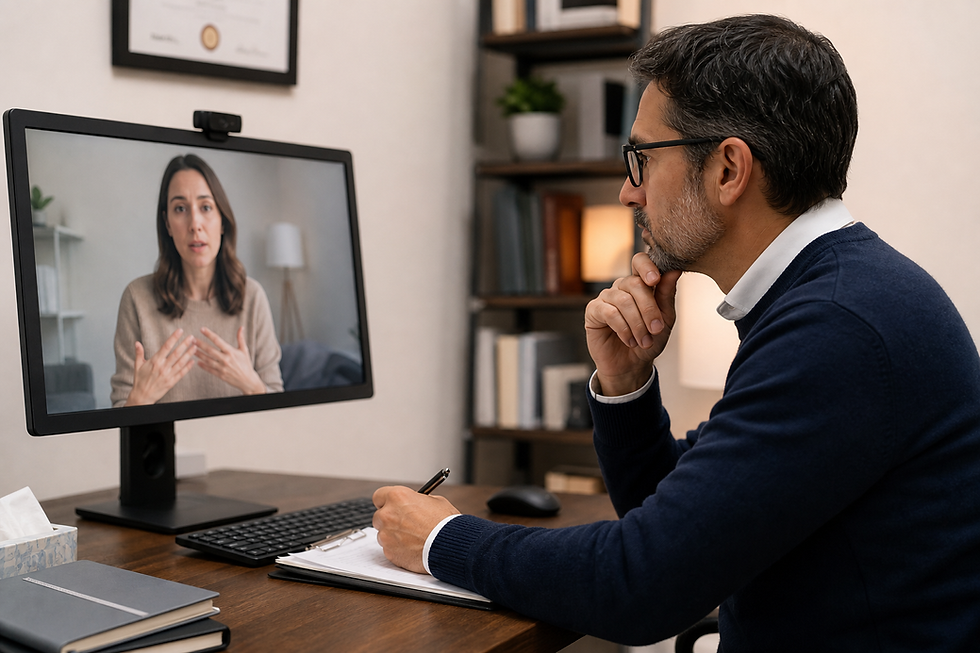
Because mental health evaluations often involve sensitive personal information, privacy deserves real attention in a telehealth setting. HHS guidance for telehealth and telebehavioral health emphasizes choosing a private location, using secure connections, and making sure others cannot overhear the conversation unless their presence is intended and appropriate.[2][3]
That is one reason telehealth mental health IME evaluations should not be approached casually. Taking the call from a noisy public space, multitasking during the appointment, or using unstable technology can interfere with the quality of the evaluation. A quiet room, strong connection, charged device, and uninterrupted time window all help support a better process.
Professional standards also remain important on the evaluator’s side. Telehealth still requires appropriate credentials, sound clinical judgment, secure handling of information, and attention to the limits of remote assessment. A virtual format should not lower the quality of the evaluation.
When Telehealth May Be a Good Fit
Telehealth may be especially useful when geographic distance makes in-person access difficult, when travel would create an unnecessary burden, or when scheduling flexibility is needed to complete an assessment more efficiently. It can also help reduce some of the logistical friction that delays formal mental health review.
That said, telehealth is not automatically the right fit for every situation. Some evaluations may require in-person components, and some individuals may have privacy, technology, cognitive, language, or clinical factors that make remote assessment less effective. The right question is not whether telehealth is always better. It is whether telehealth is appropriate for the specific evaluation being requested.
A well-run telehealth mental health IME evaluation balances accessibility with structure. It should be convenient enough to reduce avoidable barriers, but rigorous enough to preserve the integrity of the assessment.
Why a Clear Understanding of the Process Helps
People often feel more comfortable with formal evaluations when they know what the appointment is and what it is not. A telehealth mental health IME evaluation is not casual conversation, and it is not ongoing treatment. It is a formal clinical assessment delivered through a secure remote format.
Understanding that distinction helps set expectations. It also helps everyone involved approach the process more thoughtfully, whether they are the person being evaluated, a provider helping coordinate records, or a professional trying to understand how remote mental health assessments work in practice.
At Ascend Psychological Service, the goal of telehealth evaluation is clarity. When a careful, trauma-informed mental health assessment is needed, the remote format can provide a practical way to complete that work while still maintaining privacy, professionalism, and clinical focus.

Citations
[1] U.S. Department of Health and Human Services, Telehealth.HHS.gov. What should I know before my telehealth visit? https://telehealth.hhs.gov/patients/what-should-i-know-before-my-telehealth-visit
[2] U.S. Department of Health and Human Services, Telehealth.HHS.gov. How do I protect my data and privacy? https://telehealth.hhs.gov/patients/additional-resources/data-privacy
[3] U.S. Department of Health and Human Services, Telehealth.HHS.gov. Protecting patients’ privacy. https://telehealth.hhs.gov/providers/best-practice-guides/telehealth-for-behavioral-health/preparing-patients-for-telebehavioral-health/protecting-patients-privacy
[4] U.S. Department of Health and Human Services, Telehealth.HHS.gov. Preparing patients for a telehealth visit. https://telehealth.hhs.gov/providers/best-practice-guides/direct-to-consumer/preparing-patients-telehealth-visit
Disclaimer
This article is provided for educational and informational purposes only and should not be considered medical, psychological, or legal advice. It is not intended to establish conclusions for any specific claim, case, or individual evaluation. Individuals with mental health concerns should consult qualified healthcare professionals regarding their specific circumstances, and anyone with questions about a formal IME process should seek guidance from the appropriate professionals involved.



Comments